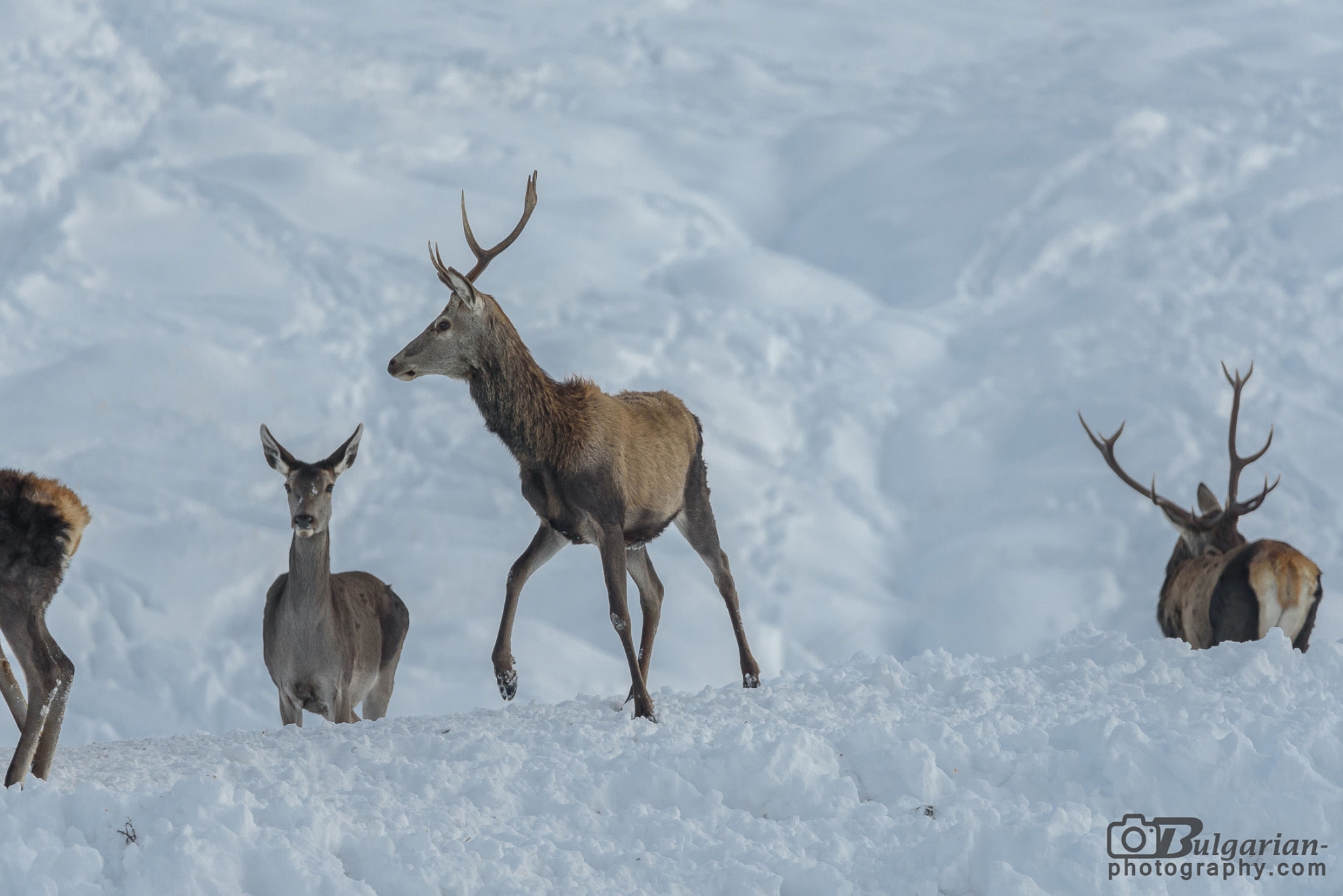
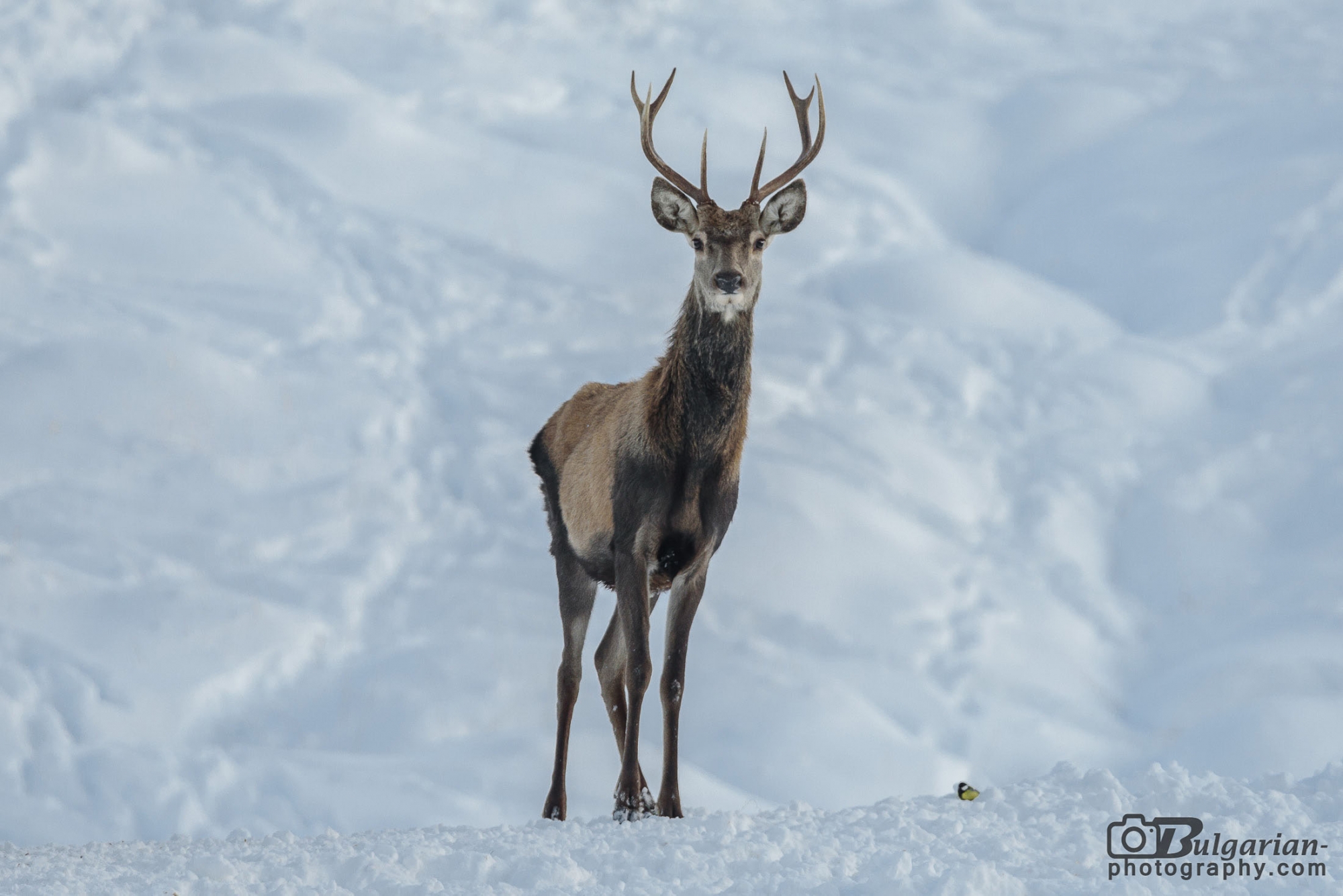
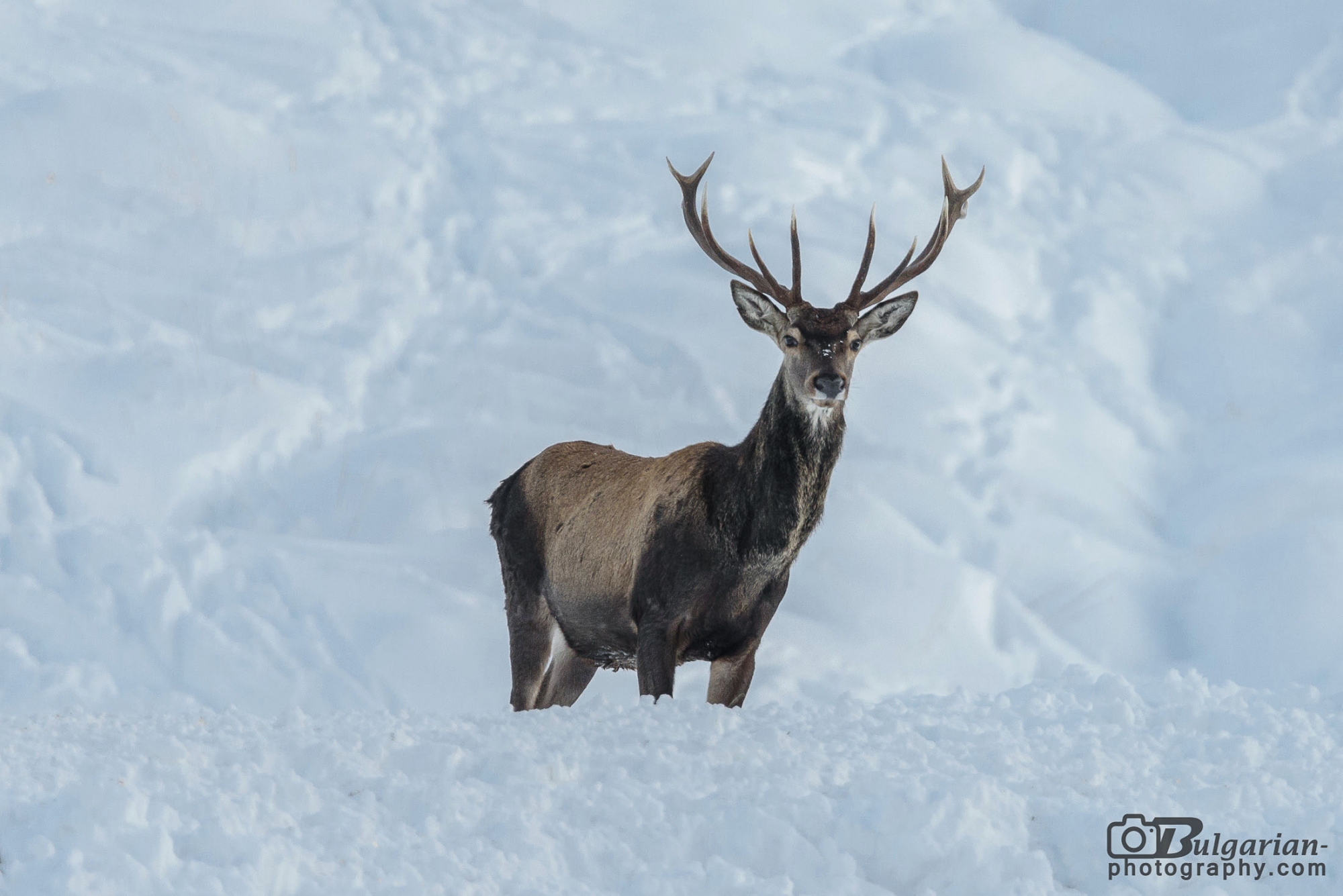
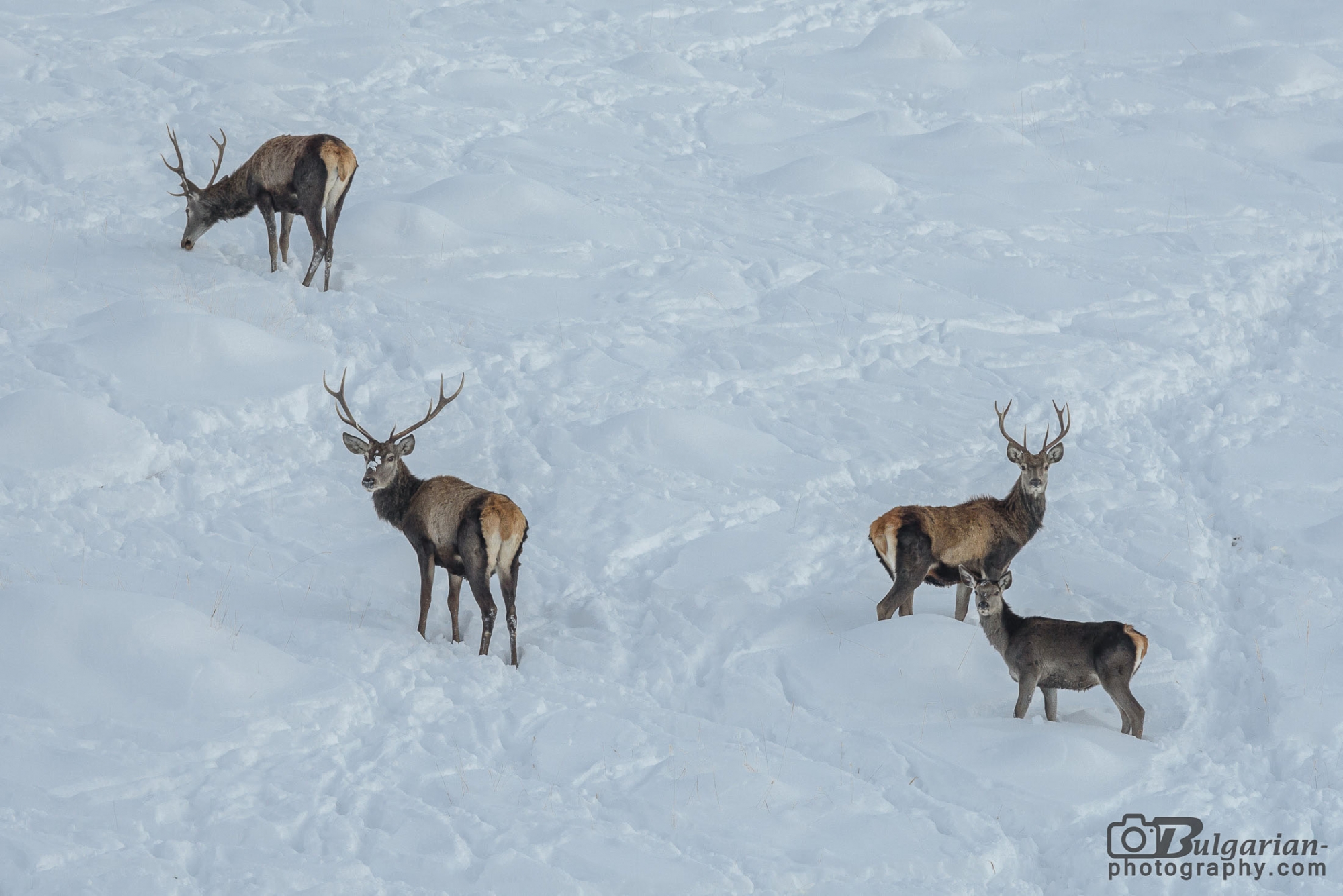
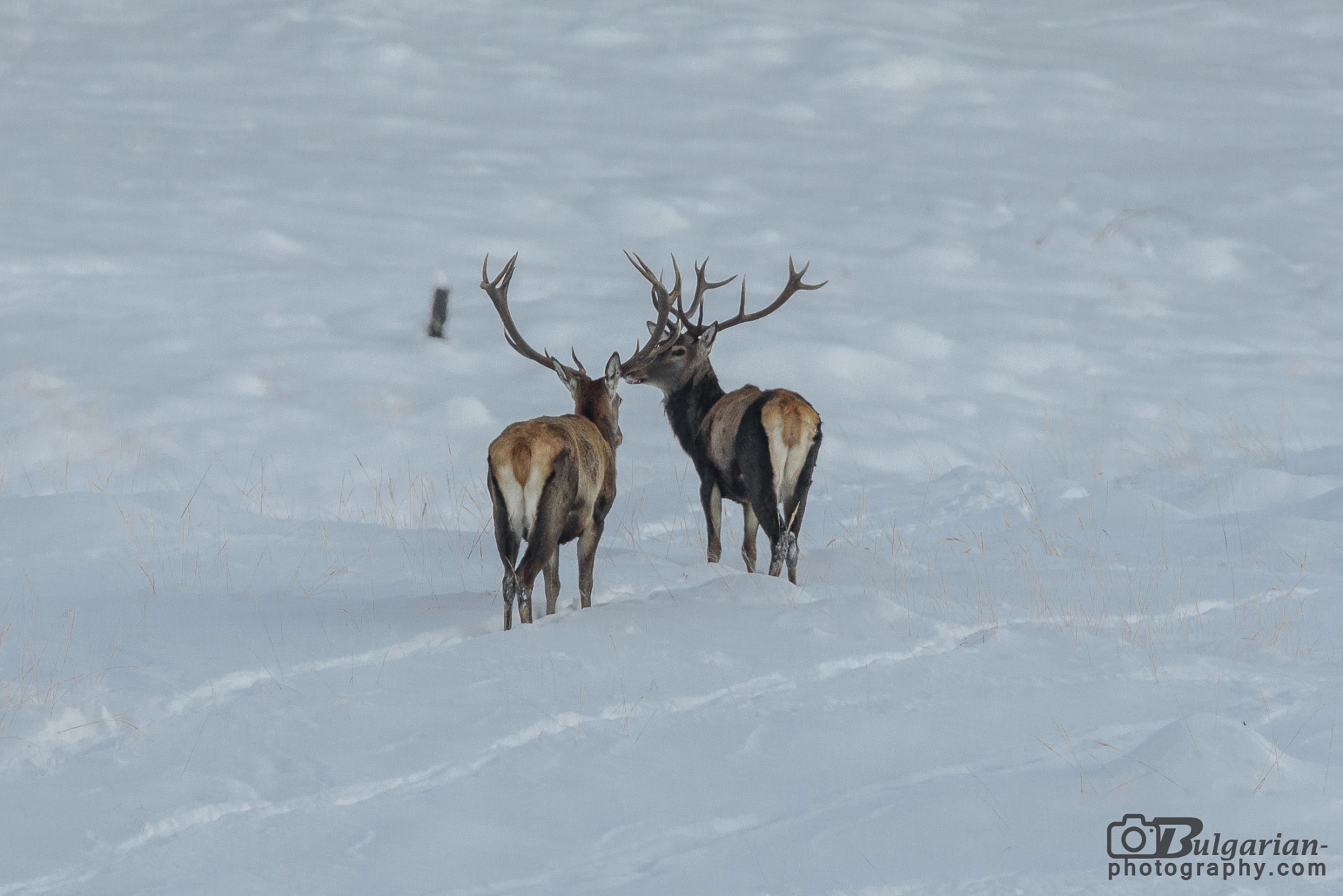
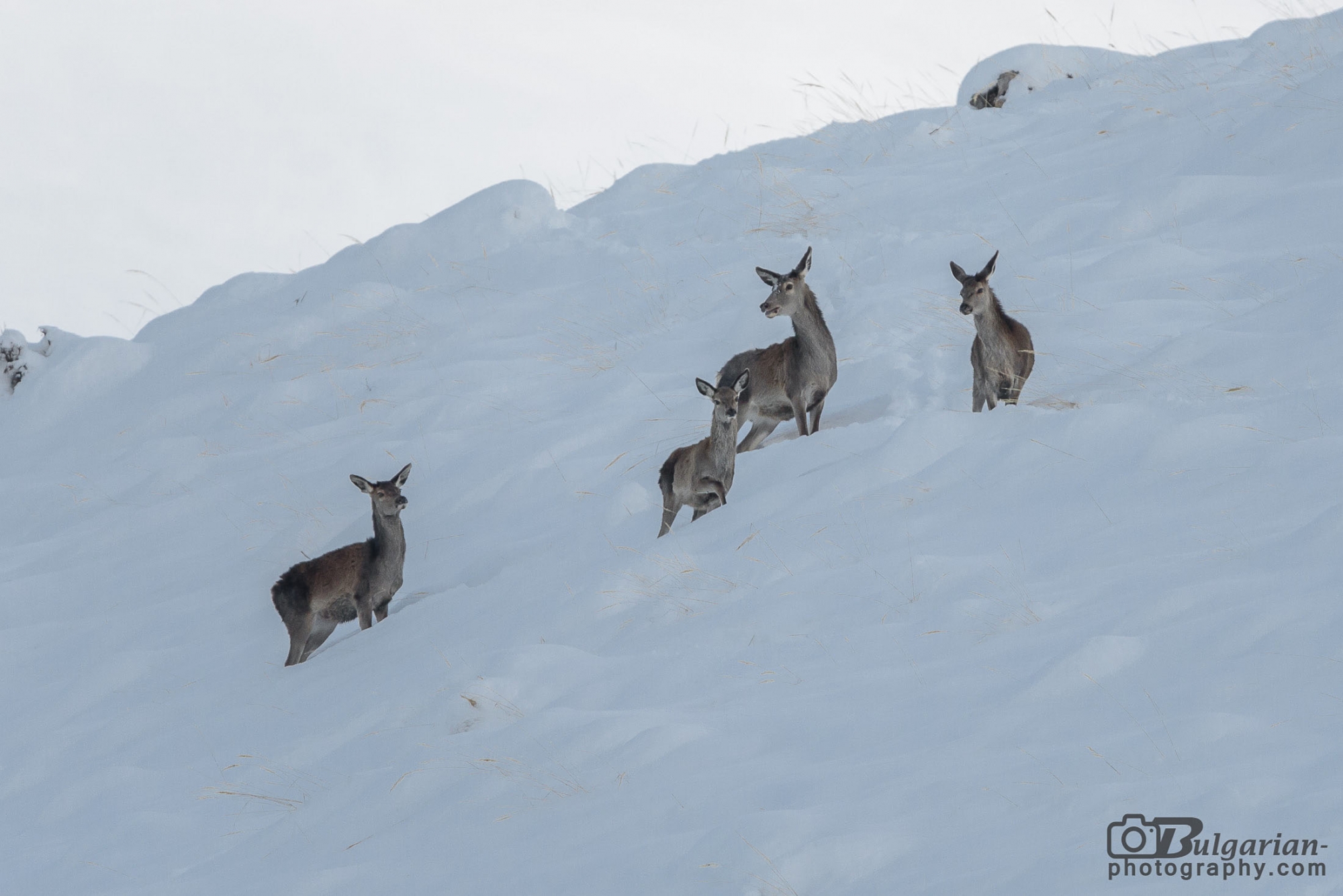
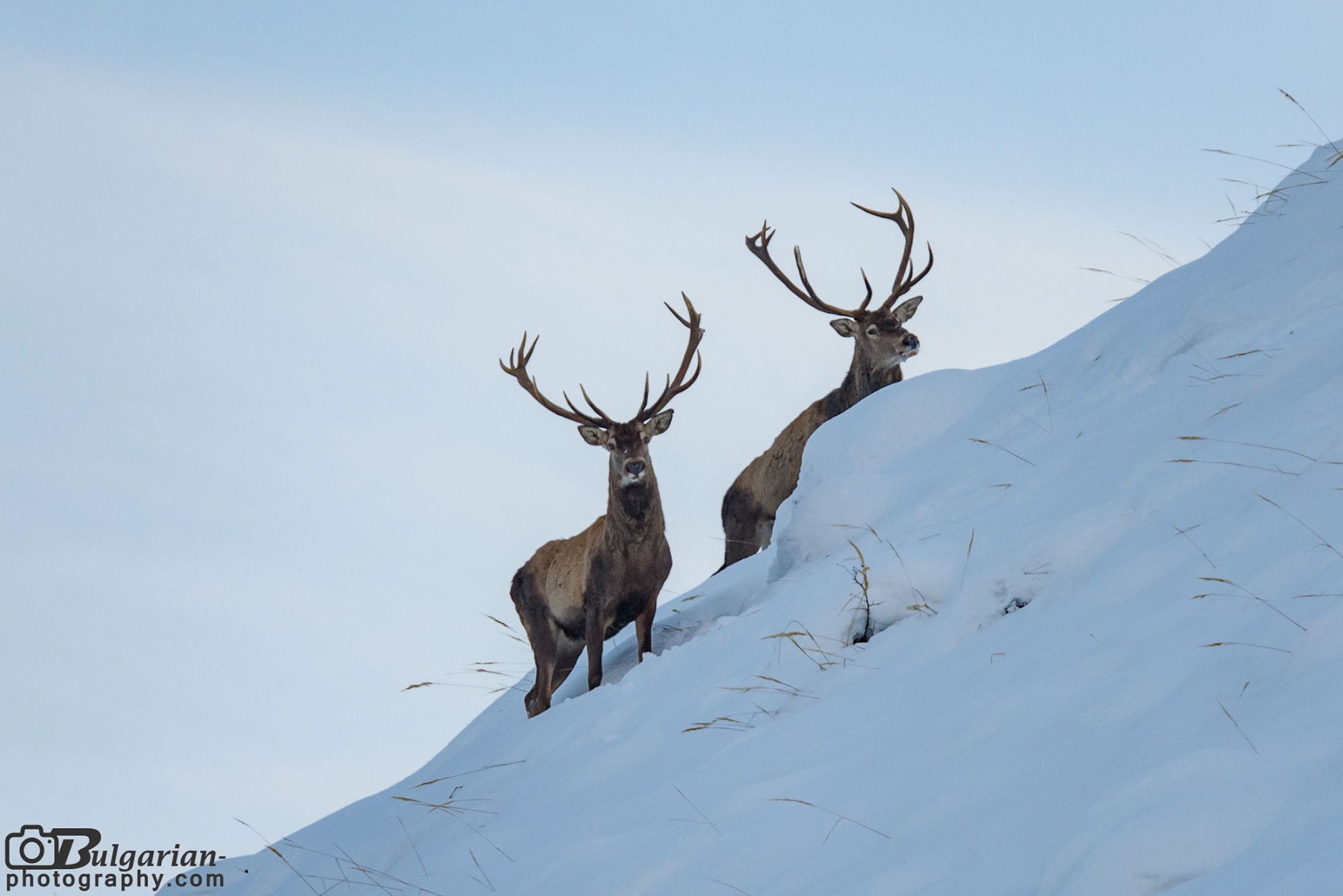
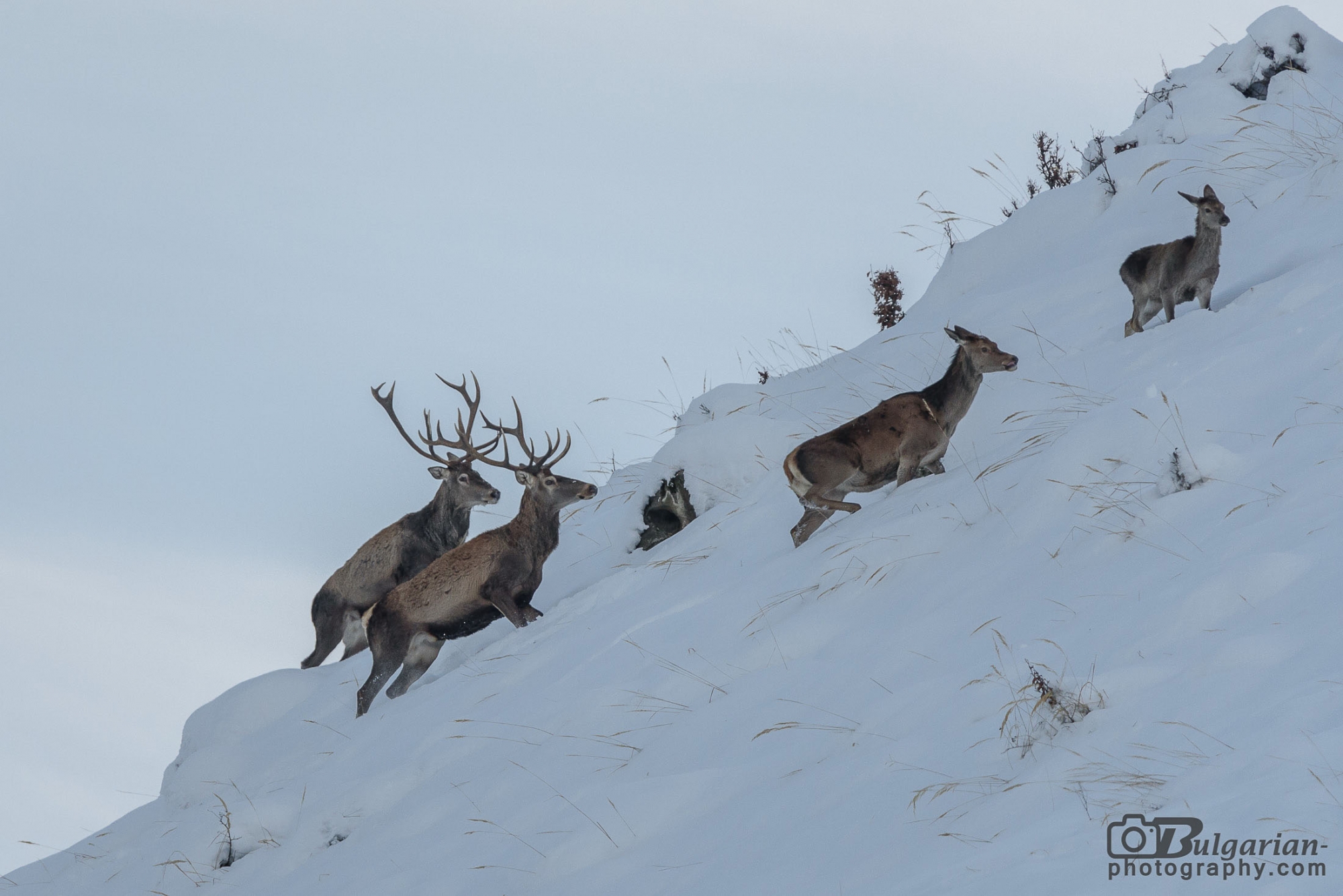
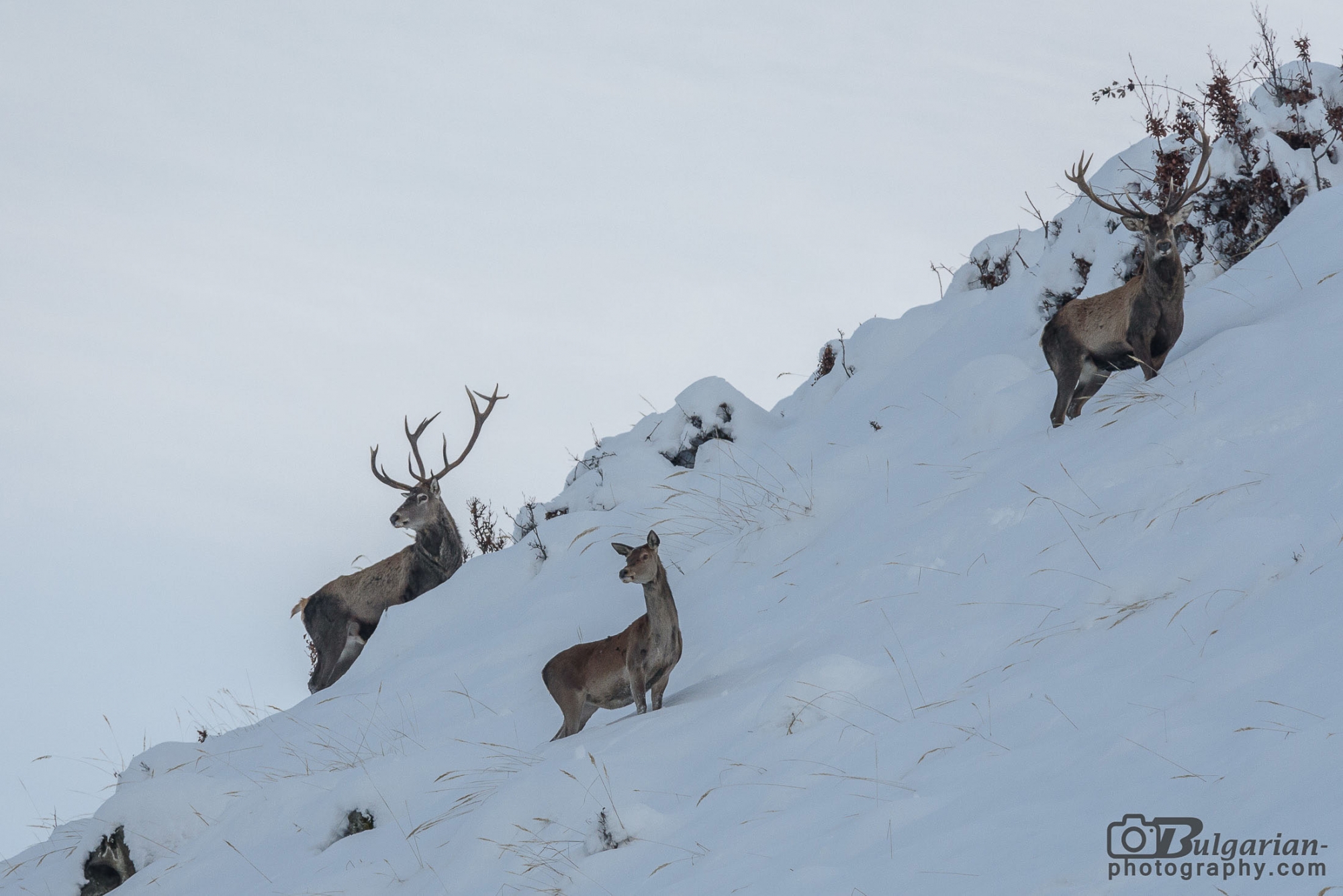
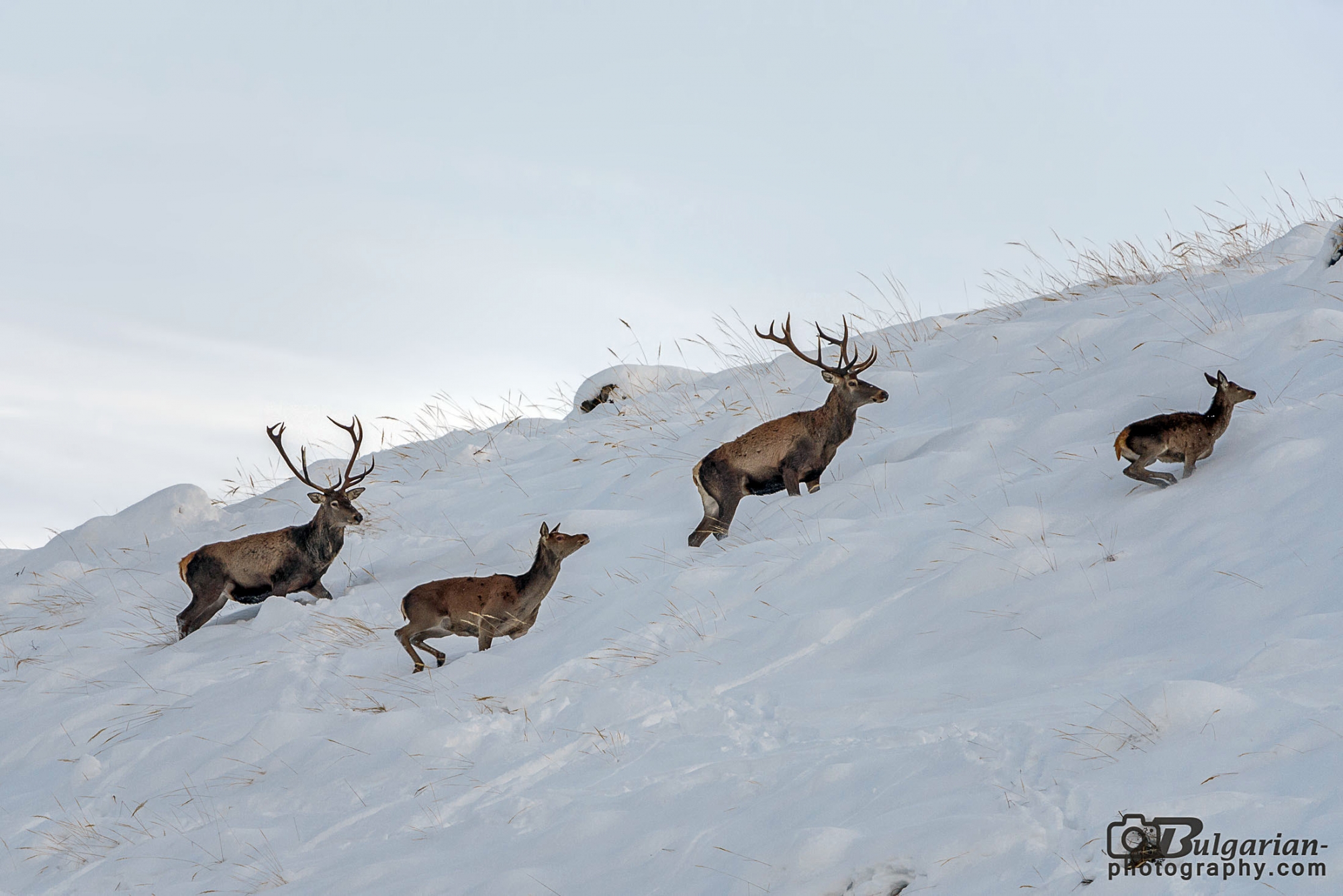
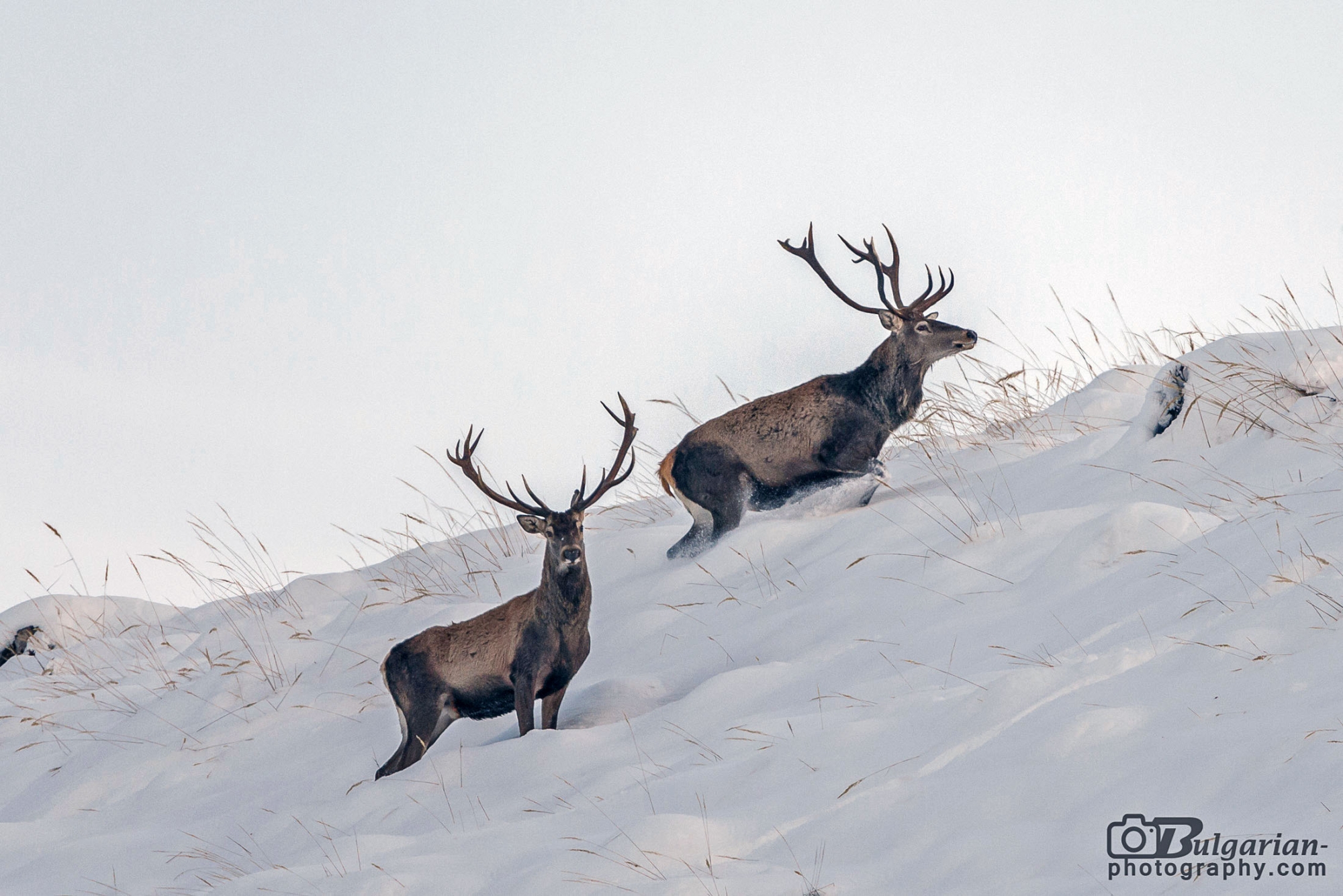
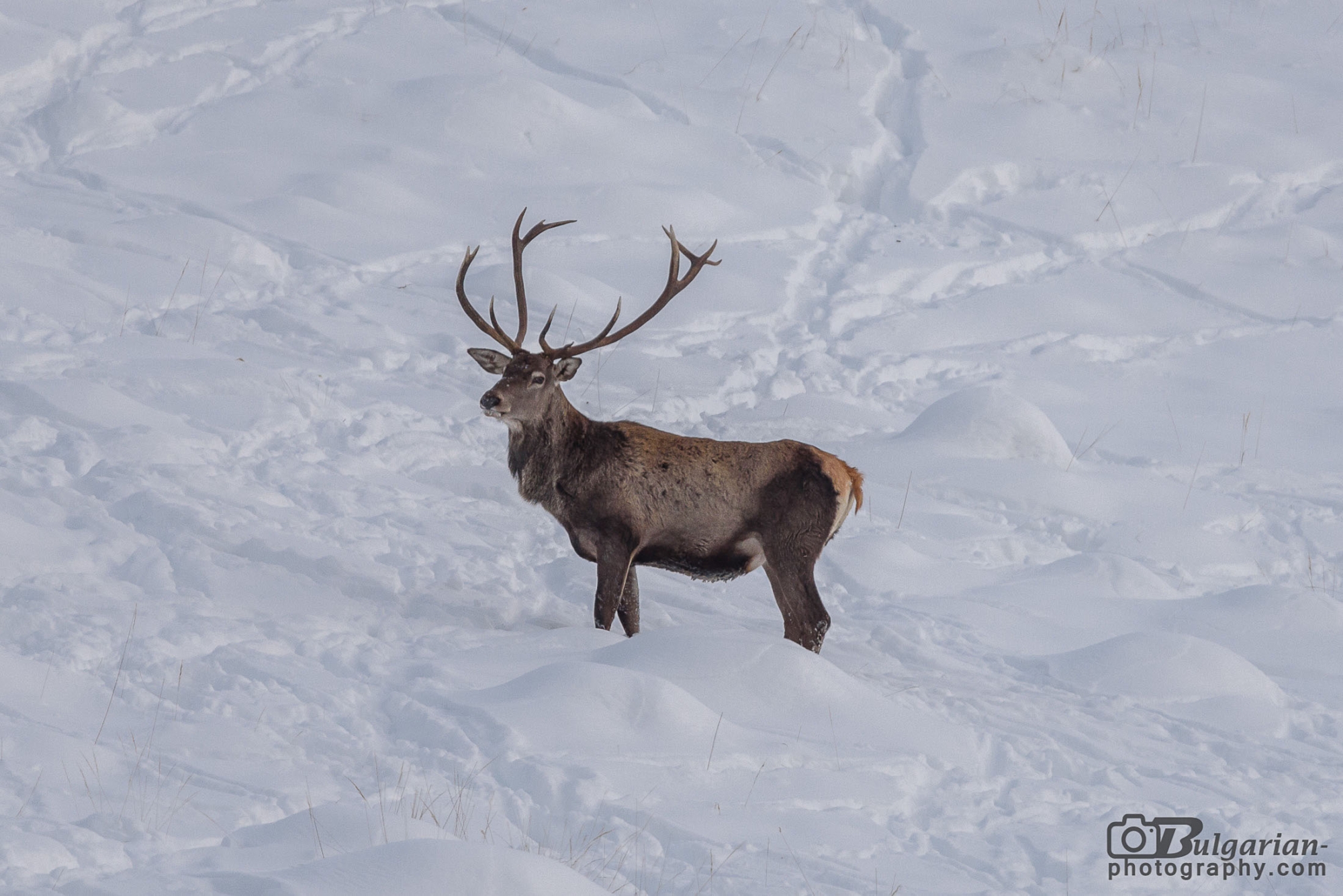
The Red Deer (Cervus elaphus) inhabits in Europe, Asia, North Africa and North America. In early 30s of the last century it is almost gone in Bulgaria. Reserved only on two localities in the Stara Planina and Rila Mountains, it was restored in the way of his re-acclimatization in all our mountains and lowland forests of the region and Dobroudzha. Unfortunately, The Red Deers (Cervus elaphus) are big trophy and therefore fairly rare.
The male (stag) red deer is typically 175 to 250 cm (69 to 98 in) long and weighs 160 to 240 kg (350 to 530 lb); the female (hind) is 160 to 210 cm (63 to 83 in) long and weighs 120 to 170 kg (260 to 370 lb).[citation needed] The tail adds another 12 to 19 cm (4.7 to 7.5 in) and shoulder height is about 95 to 130 cm (37 to 51 in). Size varies in different subspecies with the largest, the huge but small-antlered deer of the Carpathian Mountains (C. e. elaphus), weighing up to 500 kg (1,100 lb). At the other end of the scale, the Corsican red deer (C. e. corsicanus) weighs about 80 to 100 kg (180 to 220 lb), although red deer in poor habitats can weigh as little as 53 to 112 kg (120 to 250 lb). European red deer tend to be reddish-brown in their summer coats. The males of many subspecies also grow a short neck mane during the autumn. The male deer of the British Isles and Norway tend to have the thickest and most noticeable manes. Male Caspian red deer (C. e. maral) and Spanish red deer (C. e. hispanicus) do not carry neck manes. Male deer of all subspecies, however, tend to have stronger and thicker neck muscles than female deer, which may give them an appearance of having neck manes. Red deer hinds (females) do not have neck manes. The European red deer is adapted to a woodland environment.
Only the stags have antlers, which start growing in the spring and are shed each year, usually at the end of winter. Antlers typically measure 71 cm (28 in) in total length and weigh 1 kg (2.2 lb), although large ones can grow to 115 cm (45 in) and weigh 5 kg (11 lb). Antlers, which are made of bone, can grow at a rate of 2.5 cm (1 in) a day. A soft covering known as velvet helps to protect newly forming antlers in the spring. European red deer antlers are distinctive in being rather straight and rugose, with the fourth and fifth tines forming a "crown" or "cup" in larger males. Any tines in excess of the fourth and fifth tine will grow radially from the cup, which are generally absent in the antlers of smaller red deer, such as Corsican red deer. Western European red deer antlers feature "bez" (second) tines that are either absent or smaller than the brow tines. However, bez tines occur frequently in Norwegian red deer. Antlers of Caspian red deer carry large bez tines and form less-developed cups than western European red deer, their antlers are thus more like the "throw back" top tines of the wapiti (C. canadensis), known as maraloid characteristics. A stag can (exceptionally) have antlers with no tines, and is then known as a switch. Similarly, a stag that does not grow antlers is a hummel. The antlers are testosterone-driven and as the stag's testosterone levels drop in the autumn, the velvet is shed and the antlers stop growing. With the approach of autumn, the antlers begin to calcify and the stags' testosterone production builds for the approaching rut (mating season).
During the autumn, all red deer subspecies grow thicker coats of hair, which helps to insulate them during the winter. Autumn is also when some of the stags grow their neck manes. The autumn/winter coat of most subspecies are most distinct. The Caspian red deer's winter coat is greyer and has a larger and more distinguished light rump-patch (like wapiti and some central Asian red deer) compared to the Western European red deer, which has more of a greyish-brown coat with a darker yellowish rump patch in the winter. By the time summer begins, the heavy winter coat has been shed; the animals are known to rub against trees and other objects to help remove hair from their bodies. Red deer have different colouration based on the seasons and types of habitats, with grey or lighter colouration prevalent in the winter and more reddish and darker coat colouration in the summer. Most European red deer have reddish-brown summer coats, and some individuals may have a few spots on the backs of their summer coats.
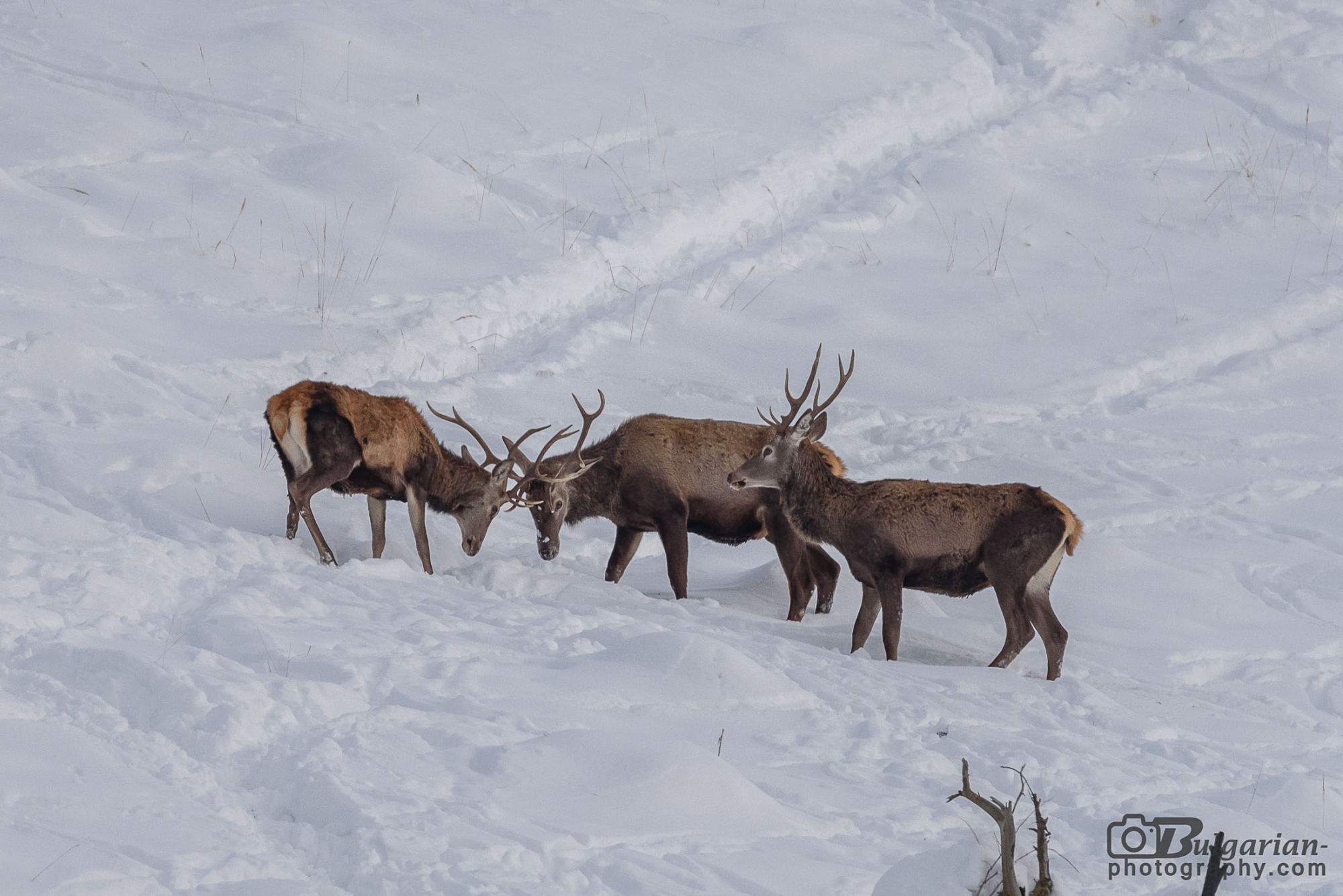
Mature red deer (C. elaphus) usually stay in single-sex groups for most of the year. During the mating season, called the rut, mature stags compete for the attentions of the hinds and will then try to defend the hinds they attract. Rival stags challenge opponents by belling and walking in parallel. This allows combatants to assess each other's antlers, body size and fighting prowess. If neither stag backs down, a clash of antlers can occur, and stags sometimes sustain serious injuries.
Dominant stags follow groups of hinds during the rut, from August into early winter. The stags may have as many as 20 hinds to keep from other, less attractive males. Only mature stags hold harems (groups of hinds), and breeding success peaks at about eight years of age. Stags two to four years old rarely hold harems and spend most of the rut on the periphery of larger harems, as do stags over 11 years old. Young and old stags that do acquire a harem hold it later in the breeding season than those stags in their prime. Harem-holding stags rarely feed and lose up to 20% of their body weight. Stags that enter the rut in poor condition are less likely to make it through to the peak conception period.
Male European red deer have a distinctive roar during the rut, which is an adaptation to forested environments, in contrast to male American elk stags which "bugle" during the rut in adaptation to open environments. The male deer roars to keep his harem of females together. The females are initially attracted to those males that both roar most often and have the loudest roar call. Males also use the roar call when competing with other males for females during the rut, and along with other forms of posturing and antler fights, is a method used by the males to establish dominance. Roaring is most common during the early dawn and late evening, which is also when the crepuscular deer are most active in general.
Red deer mating patterns usually involve a dozen or more mating attempts before the first successful one. There may be several more matings before the stag will seek out another mate in his harem. Red deer are among mammals exhibiting homosexual behavior. Females in their second autumn can produce one or very rarely two offspring per year. The gestation period is 240 to 262 days, and the offspring weigh about 15 kg (33 lb). After two weeks, calves are able to join the herd and are fully weaned after two months. All red deer calves are born spotted, as is common with many deer species, and lose their spots by the end of summer. However, as in many species of Old World deer, some adults do retain a few spots on the backs of their summer coats. The offspring will remain with their mothers for almost one full year, leaving around the time the next season's offspring are produced. The gestation period is the same for all subspecies.
Red deer live over 20 years in captivity and in the wild they live 10 to 13 years, though some subspecies with less predation pressure average 15 years.
The red deer is the most valuable game species in Europe. Bulgaria has the largest trophies of it - four world records. All are harvested in northeastern Bulgaria. Yet our country has the largest trophy deer - 273,60 CIC points.
The step of deer is very characteristic. It does not print the rear fingers. The pad takes up 1/3 of the length of the pitch. The step of beetle is rounded, and doe pointed front. The length of the beetle in print up to 10 cm, while doe to 7.5 cm, and width and is up to 7 cm and 5.2 cm. The step in the wake of mature beetle is 60-70 cm, and in hind - 50 -60 cm. The deviation is 10-15 cm for stag and doe at 5-6 cm.
Source: wikipedia